
Mixing them up has consequences: the wrong mode gets booked, freight reports blur planned and unplanned spend, and the same emergency shipments keep recurring. This article compares definitions, cost treatment, use cases and transportation modes, then walks through how to decide whether a faster shipment is justified.
Key Takeaways
- Premium freight usually means the extra or exceptional cost of moving freight urgently.
- Expedited freight is a faster-than-standard transportation service and can be planned.
- The terms overlap when you buy expedited service to recover from a delay, but they aren't interchangeable.
- Choose by weighing the delivery window and cost of delay against full door-to-door cost.
Premium Freight vs Expedited Freight: Quick Comparison
Definitions vary by company. Two patterns are most common: a cost label and a service description.
| Factor | Premium freight | Expedited freight |
|---|---|---|
| Meaning | Label for rush freight or cost above the planned option | Faster move via priority handling, direct routing, dedicated capacity, or a faster mode |
| Timing | Often tied to an unplanned recovery: supplier delay, late change, stockout | Can be requested ahead as a defined service level |
| Cost view | Often the gap between urgent cost and planned freight cost, per company policy | The quoted price of faster or more controlled transport |
| Mode | Not a mode; the result of any urgent solution | Expedited LTL, dedicated ground, next-flight-out air, charter |
Meaning and purpose
Continental's supplier manual treats premium freight as additional carriage costs caused by supplier delivery problems. DP World, by contrast, defines expedited freight by its speed: fewer stops and the fastest available routing.
Planning and cost
Expedited freight becomes premium freight when it is unplanned or well above the normal option. A scheduled next-day ground move stays a planned service. The same move booked after a supplier misses a ship date gets coded as premium.
Mode and best fit
Premium freight isn't a vehicle. It can result from expedited ground, a dedicated truck, air freight, a charter, or a helicopter. Expedited freight is the service you book when you choose that mode.
What Is Premium Freight?
In practical terms, premium freight is the urgent shipment charge, and the "premium" is the amount above what planned freight would have cost. Teams that track it separately do so because it exposes root causes: supplier delays, late production changes, poor inventory positioning or missed planning signals.
Why companies track it
Paying premium freight protects production, customer commitments and launches. The tradeoff is higher transport spend. Siemens reports downtime costing $2.3 million per hour at a large automotive plant. That figure is context for exposure, not a saving on any single shipment.

Good tracking records cause, authorization, responsibility and corrective action separately, rather than lumping urgent invoices together. Supplier manuals from CVG and OPmobility both require this kind of documentation and cost allocation to the responsible party.
Terminology varies
Rush freight, emergency freight, hot-shot and recovery freight often appear alongside premium freight. Companies define them differently, and no authoritative standard treats them as identical accounting categories. Check your own policy before comparing reports across teams.
Where it shows up
- Automotive and industrial manufacturing, when a missed supplier commitment threatens a line
- Healthcare, where urgent temperature-controlled items need the next available flight
- Aerospace and field service, where a part shortage idles expensive equipment
- Retail replenishment with fixed receiving windows
Recurring premium freight usually points to a fixable cause. Rockwell's Plex case on Eurotranciatura Mexico reports premium freight at about 0.7% of sales falling to "basically eliminated" in two years after production management improved. It's a vendor-reported case, not a benchmark, but it shows prevention and emergency recovery are separate problems.
What Is Expedited Freight?
Expedited freight moves faster or with more control than standard service. Shipments move via direct routing, priority handling, dedicated equipment, fewer handoffs, or a faster mode.
It's a service category, not one vehicle, rate or transit time. Availability depends on origin, destination, size, readiness, deadline and capacity.
Main service options
- Expedited or time-critical LTL
- Dedicated cargo vans, straight trucks or semis
- Team-driver ground service
- Scheduled air freight and next-flight-out
- Full air charter
DHL describes next-flight-out pickup as normally within 60 minutes of an order. "Normally" matters: it isn't an unconditional guarantee.
Operational impact
Expedited service shortens transit and cuts transfers, but it demands accurate pickup, delivery, commodity, equipment and accessorial details. A wrong dock hour or weight can erase the time you paid for.
Matching mode to the deadline
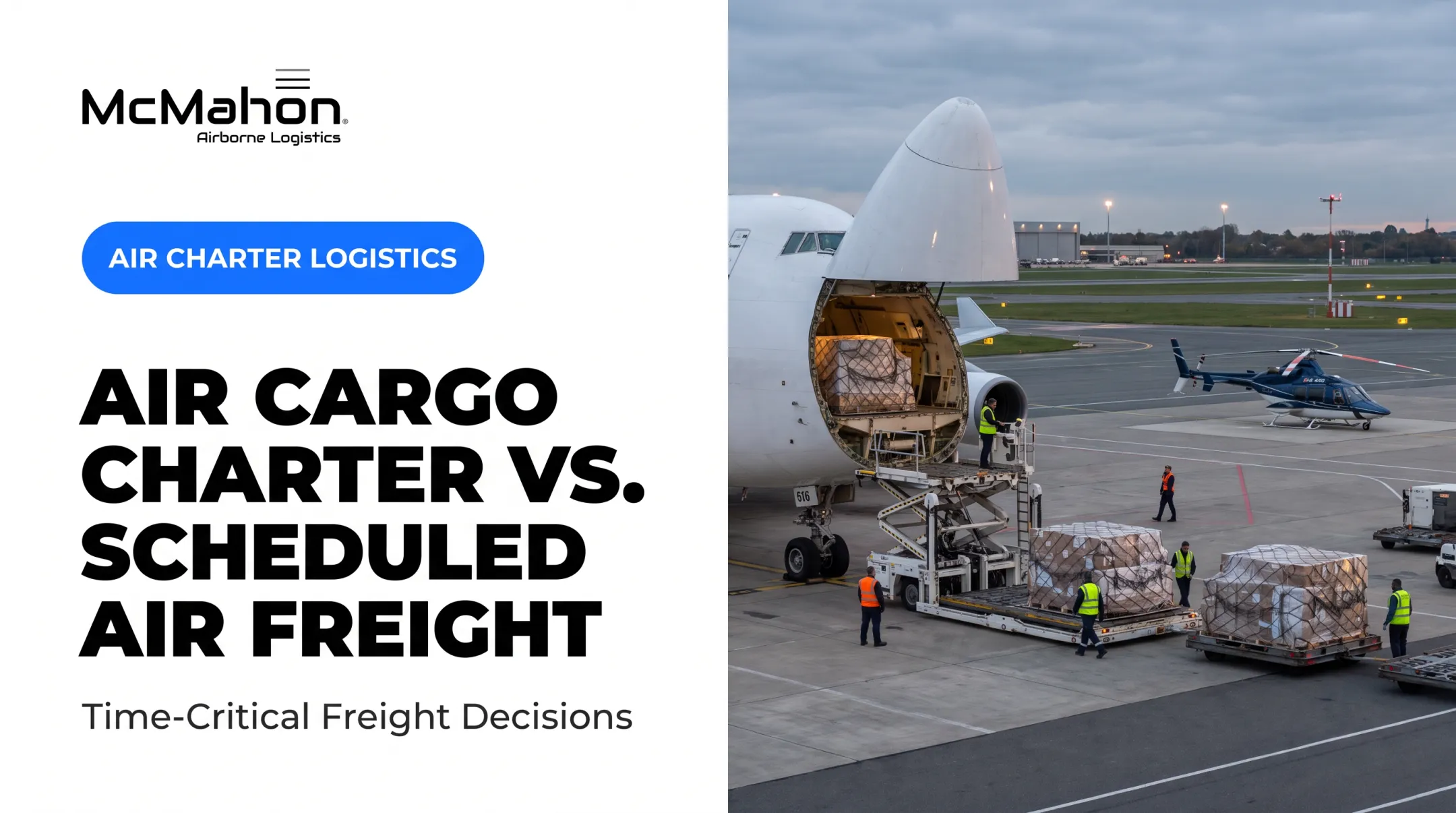
Ground can cover regional and medium-distance moves. Air or charter fits when surface transport can't make the window.
In one Ascent Logistics case, an automotive manufacturer was hours from running out of wiring harnesses with freight 1,000 miles away in Texas. A midnight air charter with ground legs delivered 1.7K lb door-to-door in 9 hours, per the provider. The case did not disclose price or avoided loss.

DHL's Same Day automotive case shows ground-plus-air recovery instead: freight was intercepted in Munich and trucked to Frankfurt for an earlier flight, so the original delivery day held. Urgency alone does not dictate the mode.
Premium Freight vs Expedited Freight: What Is Better?
Neither is better, because they answer different questions. Premium freight classifies a cost or exception. Expedited freight is a solution. Compare the business need, not the label.
Weigh delay against cost
Set the required delivery window against the cost of being late:
- Production interruption and emergency labor
- Missed customer commitments and lost sales
- Spoilage or contractual exposure
- Reputational damage
Check execution factors
- Freight dimensions and weight
- Pickup readiness and site access
- Handling, cross-border and compliance needs
- Equipment availability, tracking and final-mile coordination
Situational recommendations
- Flexible deadline: use standard transportation.
- Defined window that justifies the cost: book planned expedited service.
- Unplanned recovery or well above expected cost: ship it, then classify and investigate it as premium freight.

Reducing recurring premium freight
- Review reason codes and compare actual spend with standard freight
- Check alternate inventory before shipping
- Improve supplier and production visibility
- Ask whether the same need could be planned in advance
- Require approval, and pick the slowest service that still meets the deadline
One provider option
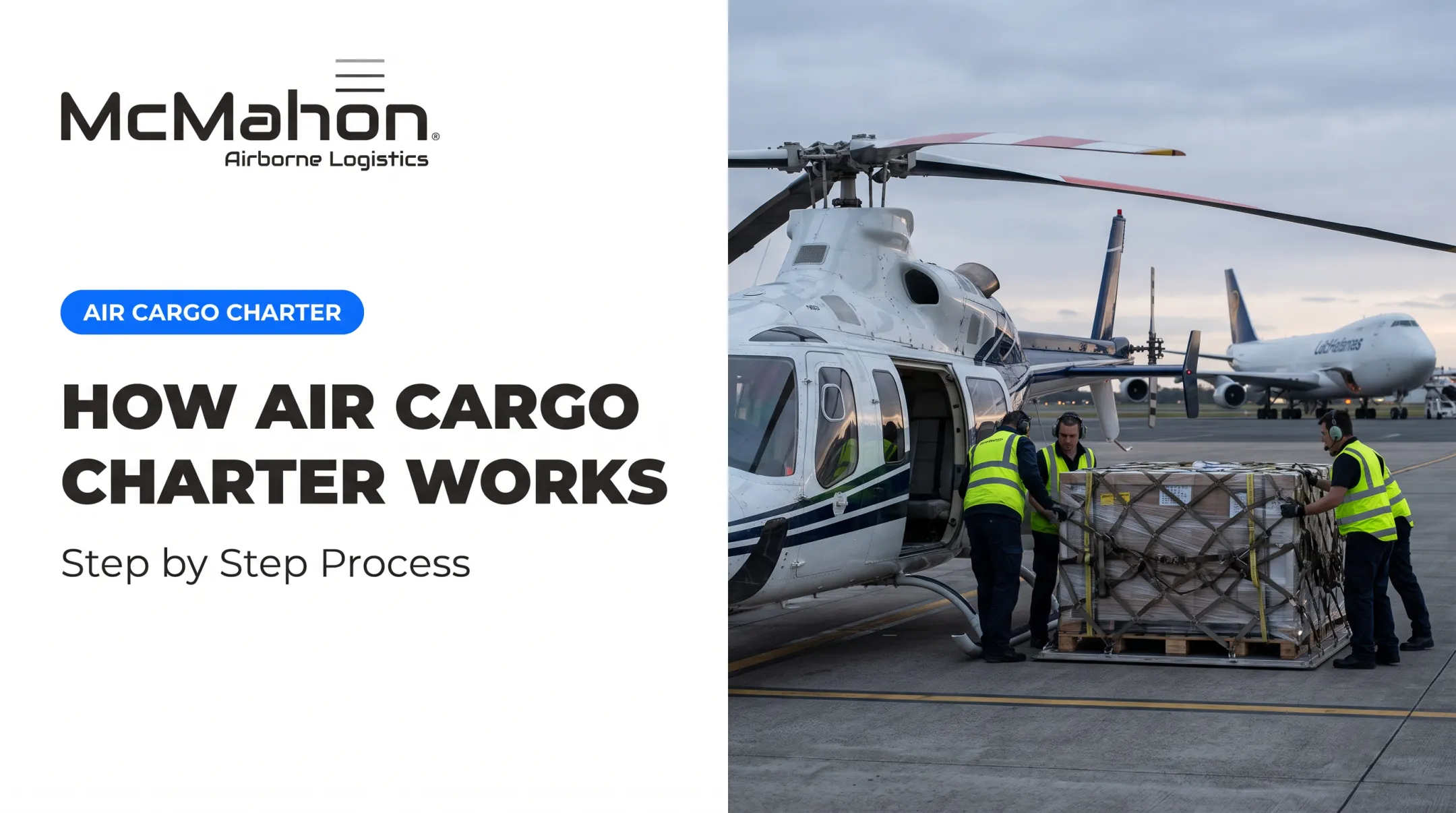
McMahon Airborne Logistics coordinates air and ground in a single quote, with round-the-clock support. For short and medium-range deadlines, or sites where airport access is impractical, its Bell 430 helicopters offer an alternative.
Helicopters carry roughly 1,200 to 1,400 lbs. with a full fuel load and have a 600-mile effective radius. For known locations, McMahon can quote timing and cost in about 5 minutes.
Longer hauls use jet or turboprop partners operated by FAA-licensed Part 121 and Part 135 carriers. That is one option among several, not a fit for every shipment.
A practical example
Take the DHL case. A planned Mexico flight lost capacity and rebooking meant a 24-hour delay. Intercepting the freight and moving it to an earlier flight was reactive recovery, so it counts as premium freight.
If the same lane regularly suffers capacity or paperwork problems, that points to a process issue. Planned expedited service or earlier documentation checks would cost less than repeated rescues.
If you're weighing an urgent air, ground or helicopter-enabled move, contact McMahon Airborne Logistics at 1-800-752-8590 (option 1) for help evaluating the options.
Conclusion
Premium freight and expedited freight overlap in urgent situations. Premium freight generally describes the exceptional cost or classification. Expedited freight describes the faster service.
When you choose between them:
- Match mode and service level to the true deadline
- Compare the premium with the cost of delay
- Investigate recurring premium freight instead of treating each emergency as unavoidable
Frequently Asked Questions
What is premium freight?
It's an exceptional, rush or above-standard freight cost or classification. Companies use the term differently, so check your own policy.
What is expedited freight?
Expedited freight moves faster than standard service through direct routing, priority handling, dedicated capacity or faster modes such as air.
What are the main types of freight?
Common categories include parcel, LTL, truckload, intermodal, ocean, air, expedited ground and air charter. Some describe mode, some shipment size, and some service level.
Is premium freight the same as expedited freight?
No, though they can overlap. Expedited freight is the service; premium freight usually refers to the added cost and often signals an unplanned shipment.
When should a business choose expedited freight?
Choose it when missing the deadline costs more than the added transportation expense and standard service can't meet the window.
How can businesses reduce premium freight costs?
Use approval controls, reason codes and root-cause reviews. Gain earlier visibility into supplier delays, check alternate inventory, and choose the slowest service that still meets the deadline.